Welcome to the Harness Goat Society blog.
Latest Posts
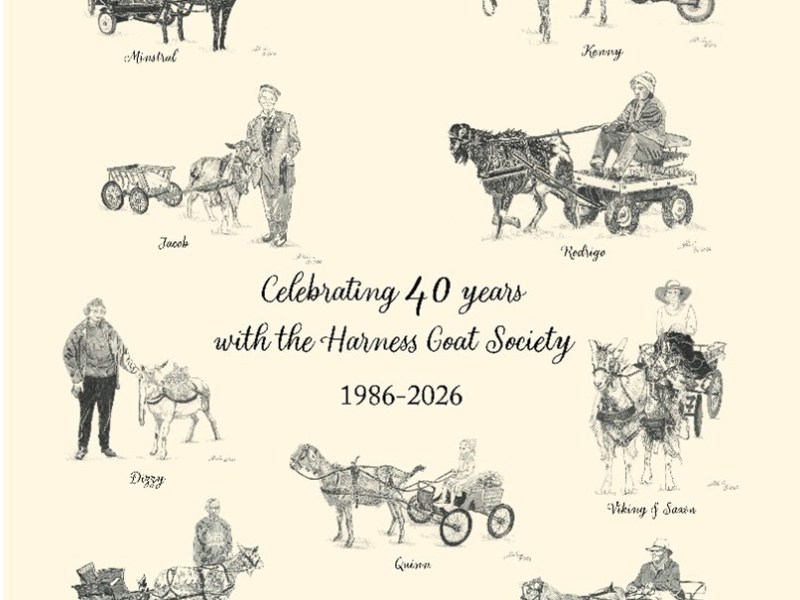
HGS 40th Anniversary Tea towel
Can you believe that the Harness Goat Society celebrates its 40th birthday this year! It’s a huge achievement to have reached this milestone. In recent years our membership has grown and become worldwide. Through our presence at shows and other…
Read More…Harness Goat Society in the US
It’s the 26th April 2022 and two of our committee members (Paul and Sally) are heading north east from New York City to visit one of our international members. We sit on the express train through White plains and Hawthorne,…
Read More…Huge excitement, our first set of goat harness !
There is a buzz going around the barn at the Wittenham herd of dairy goats in Oxfordshire. Kenny, a yearling purebred Anglo-Nubian wether who has been kept to fly the flag for the award winning cheeses made here, has been…
Read More…Dotty, Elsa & their friends join the Harness Goat Society
Hello all fellow goat lovers My partner and I are new members and I’ve been asked to let you know a bit about myself and my goats. I keep my goats in a small village near Bath Somerset, on the Cam…
Read More…Something went wrong. Please refresh the page and/or try again.
Emma Sawyer
Introduction to Barleylands
Barleylands incorporates Barleylands Farm Park, The village at Barleylands, Barleylands Equestrian Centre and Barleylands Campsite in Billericay, Essex.
The Philpot family business started in 1936 and quickly developed into a large arable farming business. The family: three brothers – Chris, Andrew Stuart and their father Peter worked together under the winder company ‘HR Philpot and Son (Barleylands) LTD.’
Led by Chris Philpot, Barleylands has become the focus for the family’s other great passion, education. The focus on education and our unique holiday events has set Barleylands apart from many other tourism businesses and has become our unique selling point.
The diversification of Barleylands becoming a tourist destination began in 1984 when Peter Philpot’s collection of vintage machinery became so large that he decided to open an agricultural themed museum to both be enjoyed and to educate the local community. Originally a dairy farm, Peter was able to utilise the old farm buildings that were no longer in use.
The next phase of development came in 1996 when eldest son Chris finished college and was given responsibility for the farm museum. Chris passion for education encouraged by his father saw the number of school children visiting the museum steadily increase.
Chris further developed the farm to enhance the learning experience. Several farm animals were introduced to help children understand where our food comes from. This investment gave Chris the idea of opening a Farm Park for the local community.
In its early beginnings the opening of the Farm Museum in 1984 grew and grew. Our aims now are to educate visitors on how they can learn about different types of farming and gain an understanding of how farming has impacted our lives in the past and how it affects us now. We hold hands on interactive session with a variety of animals, including our rare breeds which are steadily increasing.
Introduction to Emma and her herd
I am the assistant manager at Barleylands Farm Park. Previously I managed The Salvation Army Hadleigh Farm Rare Breed Centre for ten years. I have a passion for rare breeds, in particular the Bagot Goat.
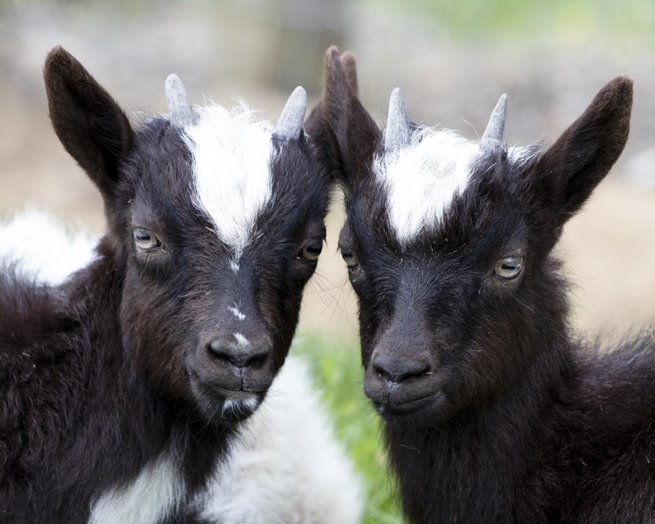
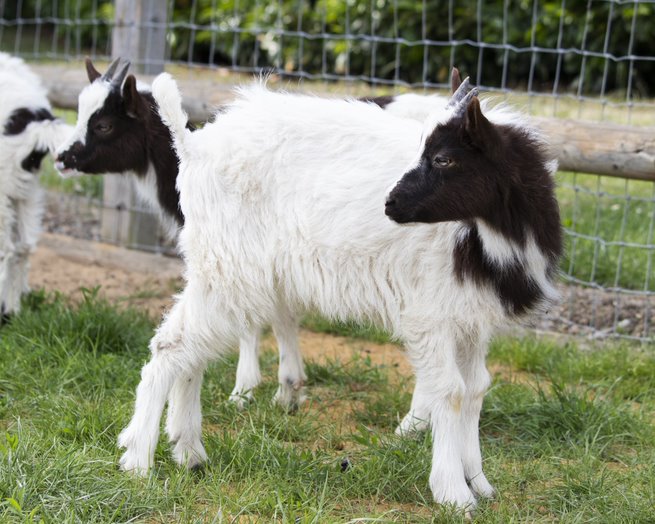
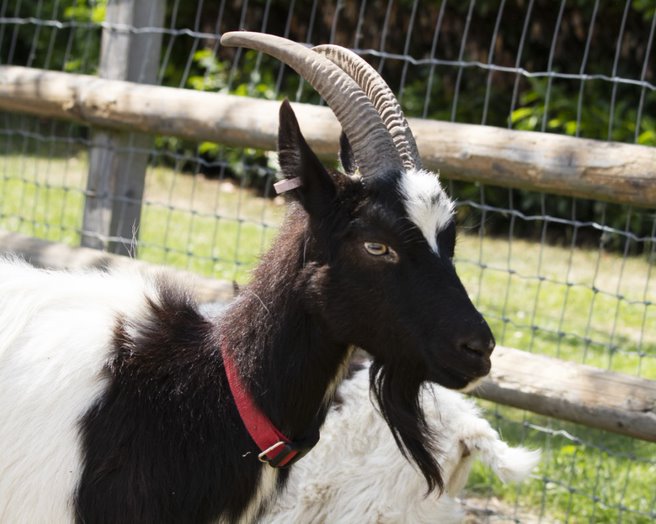
I currently have seven Bagot goats; Queen Victoria, Veena, India, Buttercup, Snowdrop, Porridge and Marmalade. And Barleylands has another seven who are related to mine! I think the Bagot goats are a stunning breed which people often overlook. As a breed the Bagot goat is not good for milk or meat and are traditionally used for conservation grazing which means they can be quite feral. They are a medium size goat traditionally with a black head and white body.
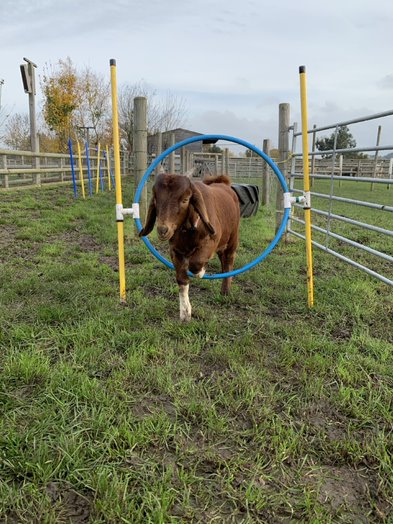
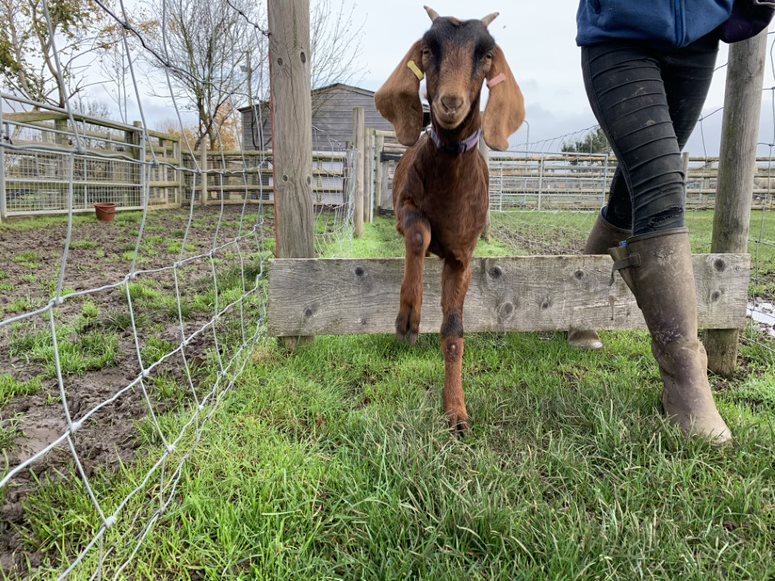
Before working on the farm, I did a degree in Animal Behaviour and hosted dog training classes. I applied my skill set and trained an Anglo Nubian, Dora and a boar, Queenie who are part of the goat agility team at Barleylands. Queenie and Dora now weave, jump, climb, stand, and spin their way around our agility course daily.
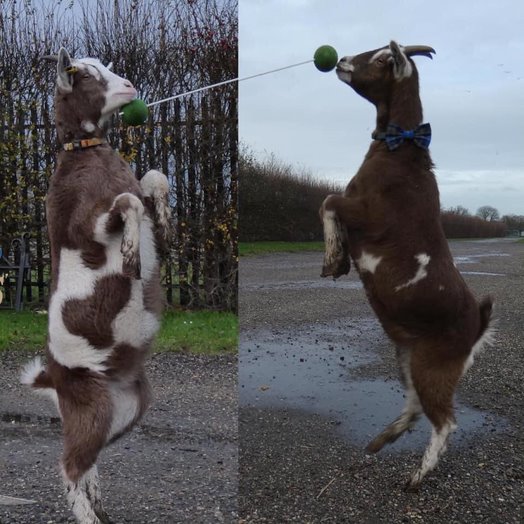
I wanted to train Bagot goats in a similar way to show people that they aren’t as wild as people believe them to be. Like any pet I think the more time you spend with them the more benefits you will reap. I have spent a lot of time with my Bagot goats who were to the point they will now follow me with a bucket and the two boys I bred this year; Porridge and Marmalade have been target training. When I first started, they feared the clicker and boulted out of the pen but with a tasty bribe and a bit of patience they have now learnt target and stand. When I read on the Goat harness society that any goat could be trained, (except maybe the Bagot), it did make me chuckle and I am hoping with time and patience I can show this breed are also capable of being trained.
Follow Me
Get new content delivered directly to your inbox.
 The Harness Goat Society