Categories
Uncategorized

HGS 40th Anniversary Tea towel

Can you believe that the Harness Goat Society celebrates its 40th birthday this year!

It’s a huge achievement to have reached this milestone. 


In recent years our membership has grown and become worldwide. Through our presence at shows and other events members have introduced many many people to harness goats, something the vast majority of people didn’t know ever existed, and given pleasure to hundreds of children – and adults- who have enjoyed seeing and petting our wonderful goats. 


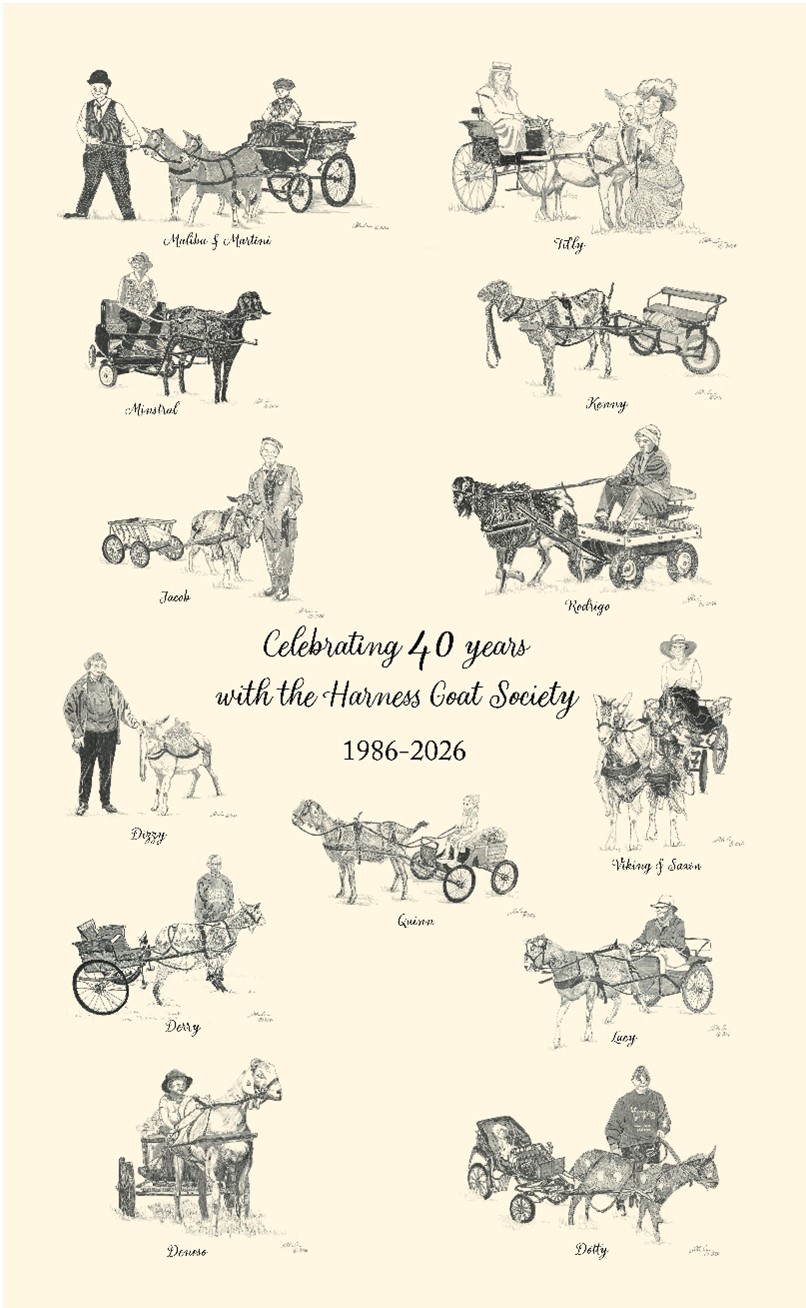
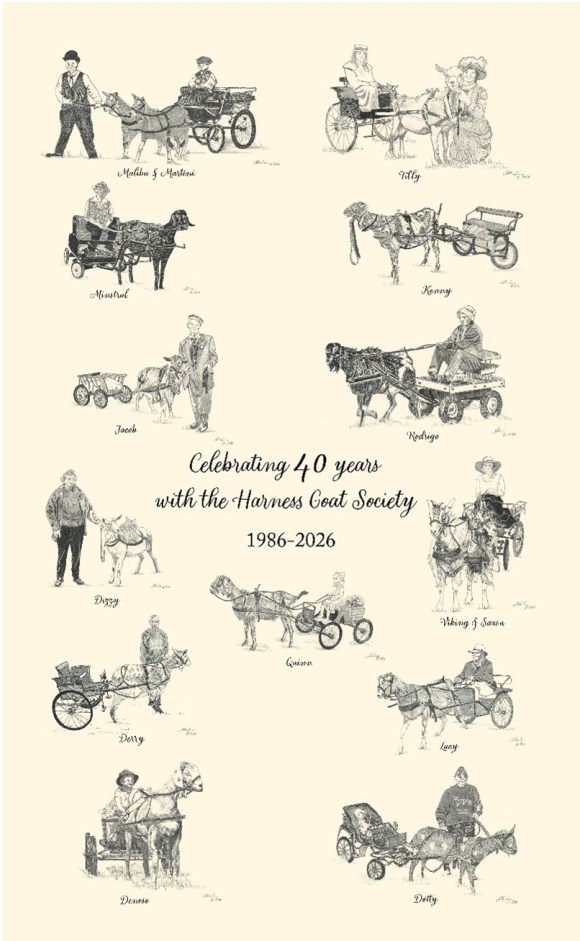
To celebrate this commemorative year we have commissioned animal and wildlife artist, Anna Cara, to produce drawings from photos from the four decades for an anniversary tea towel. 


Anna, who is a member of HGS, has given her time and expertise entirely free. She says: “I was both honoured and daunted to be asked to produce these drawings. My medium is pastel and I work in colour so pen and ink drawings is not my fortê. I’m also not at all familiar with harnesses so trying to work out from photos what was harness and what was goat or cart was somewhat challenging, particularly from the older photo.  I must also point out that I don’t draw people!!  I do hope that members will feel that I have at least done their goats justice and will buy lots of tea towels to raise funds for this wonderful Society.”

ORDER YOUR COMMEMORATIVE TEA TOWELS NOW!

Harness Goat Society 40th anniversary tea towel
Categories
Uncategorized

Harness Goat Society in the US

It’s the 26th April 2022 and two of our committee members (Paul and Sally) are heading north east from New York City to visit one of our international members.

We sit on the express train through White plains and Hawthorne, Dover plains, Tenmile river and more rural parts of this interesting state.

Our intention is to meet with George, and to spend a couple of days talking about goats, how goat keeping in the US is different to the UK and Sally is tasked with assessing George’s harnessed goats and offering advice, guidance or both.

We arrived after a couple of hours on the train at a station called Wassiac – deep into the state of New York, to be met by George. He drove us the short distance to his lovely home to meet his chickens and most importantly,for us, his eight goats.

His home is a lovely; a quaint, quirky and homely wooden house with a gorgeous wooden barn right next door and the house looks over his three acre pasture and small vegetable garden. George explained that growing food is a challenge, not just due to the large snow fall in winter but also because he has to defend his veggies from deer, raccoons and groundhogs which love to dig up anything he plants!

We move on to the stars of our trip.Two entire males, a wether, two females and three adorable kids that Sally and I stated within five minutes that we both intended to steal!

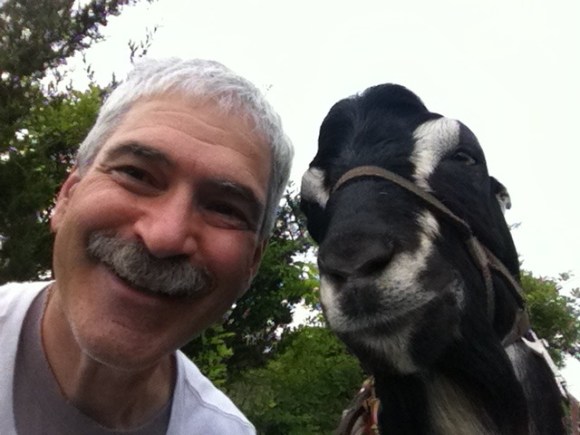
George’s herd is made up of toggenburgs and a breed that neither Sally nor I had encountered before – Lamancha, a breed Spanish in origin, George informed us. These goats are a joy and delightful, curious looking to begin with but soon totally captivating. They are marked in a manner similar to an English but also have what we would describe as the Swiss stripes down their faces. They are large in size, same size, if not slightly taller than a Toggenburg. But the thing that makes them stand out is their total lack of ear pinner. They have ears, well, ear canals, protected by hair but no other obvious sign of an ear. This is a genetic perculiality of the breed. Striking and different looking they most certainly are, but the kids especially (Thutmose and Nefertiti) just melted our hearts.

George’s aim is to get his male lamancha (Rodrigo) fully in harness and working to collect groceries. His entirety however is causing George problems in ‘attitude’. Any of the members who have shared their holding with an entire male will know exactly what is meant here!

George has two other male goats one entire and one wether.

After meeting the goats and George prising Maximilian (a single toggenburg kid) and totally gorgeous, from my hands as I was now smitten, we hatched a plan for the following day. Behind George’s lovely home is a bike trail. Our plan was to harness up the male lamancha (Rodrigo) and walk both him, the male toggenburg (Heinz) and the wether (Nijinsky) and walk along the trail with them.

Day two

After George collected us from the cottage we were staying in, Sally gave George an instructional session on harnessing using Rodrigo. George has a cart (he called it a wagon) for him. He was concerned that the shafts of the wagon, though designed for a goat were a little short. When he and Sally brought the cart to the goat, as she explained… goat stands and cart brought to the goat, not goat backed into the cart’, it was clear George’s suspicions were correct.

Therefore Rodrigo was relieved of his harness and we all set off to both George’s garage and the hardware store with lashings of plans and excitement of how to solve the problem.

I felt this was like an episode of macyver (a tv program from the eighties) but no one else knew what I was talking about!

To cut a long story short, we found bits and pieces to lengthen the shafts by around fourteen inches (35cm – for those in the UK!).

Rodrigo was duly re-harnessed and this time attached to the wagon. Rodrigo is a very large,strong and opinionated goat but slowly under Sally’s guidance and George’s vocal commands within forty five minutes he was pulling George in the wagon around George’s garden. Now we all know ‘one

swallow doesn’t make a summer’ so let’s not pretend Rodrigo took to his workload with grace and acceptance. There would still be work to do for George, lots of it, but Rodrigo did go in harness and he did pull George, whilst he sat in the wagon.

So first job successfully completed.

Next it was the turn of the wether Nijinsky. Being a wether this was a far calmer, easier (he is a smaller toggenburg) experience and most importantly safer. Both Sally and I immediately impressed our opinion on George that Nijinsky is potentially the better goat to work with as is both calmer and consistent, but it is neither our goat or decision.

Nijinsky being a little smaller fitted into the wagon slightly more easily than Rodrigo, and again with Sally’s guidance was soon pulling George around the garden. It must be said without the enthusiasm of Rodrigo but Sally stated to George she could see massive potential but he needed work to build confidence.

So second task successful.

The last job of day to was to walk Rodrigo, Nijinsky and the other entire male (Heinz) up the trail, just for fun, but of long reining and browsing some verges and hedgerows.

Both Rodrigo and Heinz were very pleased to be out, Nijinsky though, being less confident, slipped his head collar less than ten metres from home and calmly walked back! (I ask you, who’d have a goat!!!).

The other two however had a grand time and Sally suggested that Heinz would make an excellent pack goat as he was so stable, yet strong, and would be able to easily carry George’s groceries from the store.

So task three of the day successful (well partially).

A plan was hatched for the final day of our time with George to re-harness both Rodrigo and Nijinsky. A second training session under the tutelage of Sally should build some confidence in both Nijinsky and George in his harness technique but also to try to focus Rodrigo on his new role at home.

Day three

Wow, what a difference a day makes?!

On day three Sally and George harnessed Rodrigo and attached the wagon. The wild and strong minded goat had ‘reflected’ over night and was far less ‘enthusiastic’ and more willing to listen and seemingly understanding of the task. He pulled George in a circular route around his garden when following Sally. He did struggle still with cornering but that will come. George said he would work on Rodrigo moving in straight lines to begin with , getting of the wagon to turn until Rodrigo is confident and will then work on turning.

Nijinsky however was a different story, we were hoping that his ‘reflection’ would have built a little confidence. He is however still very unsure, He walks well but is occasionally spooked into running, or nervously stops. Sally and myself still think that he has the potential to be n excellent harness goat, he just needs time, consistency and treats to build his confidence.

Our final task with George was to put a pack on Heinz. Sally showed George how the pack should be fitted and where it should be sited.

George declared he would like him to work as a pack goat, using him to pick up and collect trash along the cross trail (a public footpath/bridleway/cycle track).

Heinz was duly brought into the barn and the pack fitted…Heinz barely reacted and continued to walk graze and be completely normal, seemingly not even noticing the pack.

By this time, and sadly, Sally and I had a train to catch so needed to leave George.
Categories
Uncategorized

Huge excitement, our first set of goat harness !

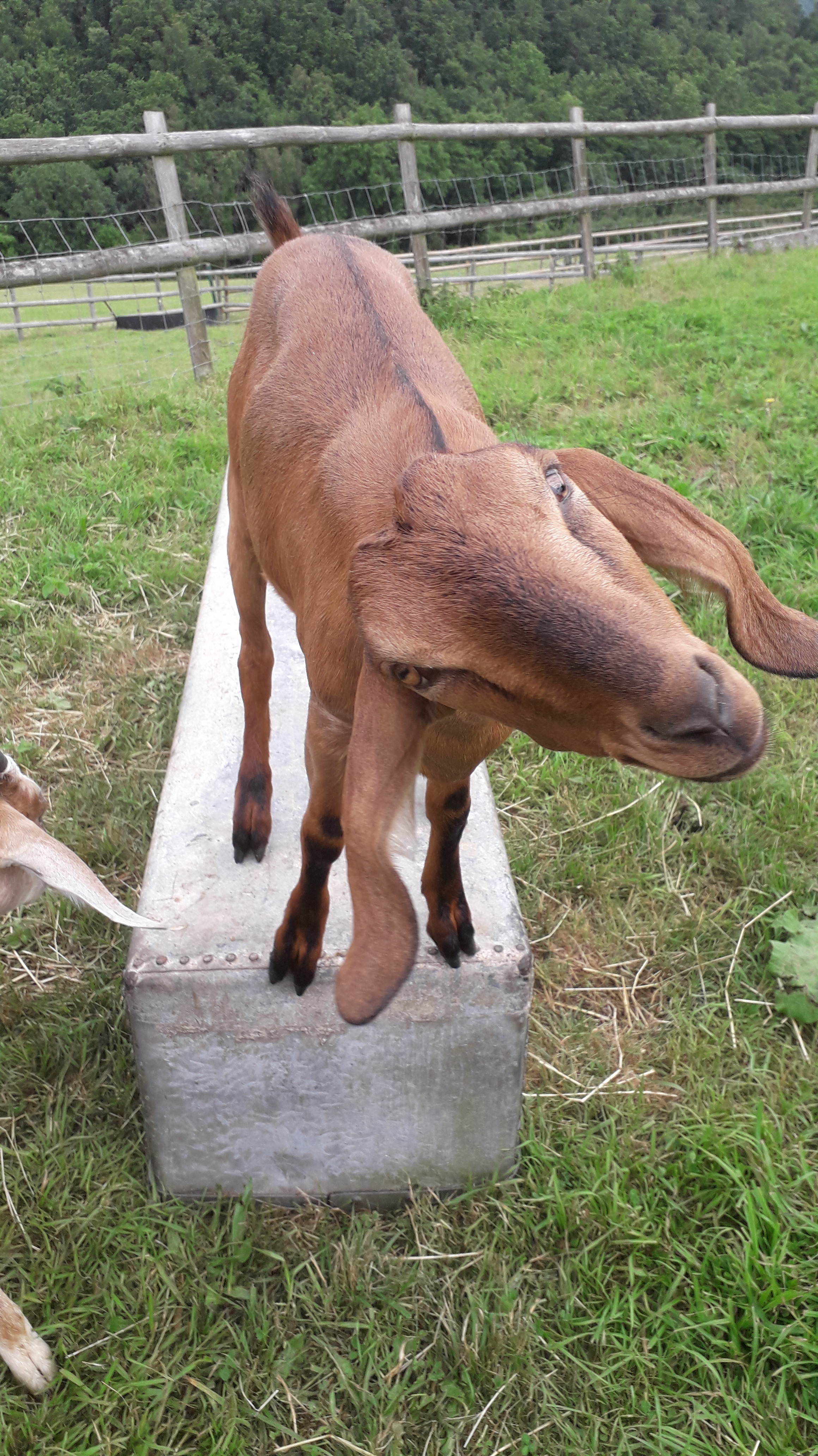
There is a buzz going around the barn at the Wittenham herd of dairy goats in Oxfordshire. Kenny, a yearling purebred Anglo-Nubian wether who has been kept to fly the flag for the award winning cheeses made here, has been introduced to his new exercise cart and harness.

Of course he is far too young to be put to the vehicle yet, but his education goes up a level now and when he grows a little more the harness will fit and he will go for little walks around the farm fully dressed!

As soon as the cart and harness arrived we couldn’t resist trying it on him, and he didn’t turn a hair, in fact was far more interested in the carrots in my pocket! We are all so excited at this new venture, it’s so good for this little chap to be offered a useful function in life, which (hopefully) he will enjoy and give pleasure to so many people as he progresses. The young staff at the farm have never seen a goat in harness before and are keen to get involved and learn the skill of training a goat to harness. My background is in horses and when young I worked in a carriage driving yard and I’m thinking this will be interesting for all of us, learning how to get the best out of an animal with a completely different mindset. And of course we won’t venture off the farm without a movement order from DEFRA, the biggest difference between driving a horse and driving a goat.

One of the cheese makers has even invited Kenny to her wedding next July, so we have a goal to work towards with his training. Will he be ready to pull her from the church to her reception just a few hundred yards away? Who knows? He will be 2 and a half by then; maybe we will just garland his harness so he can escort bride and groom. Kenny has the personality and love of people to pull it off.

Thank you to Angela Rickerby whose cart it was for her help and advice. And thanks also to Wendy Grantham and Sally Dixon for supporting enthusiastically a new member of the Harness Goat Society.

Linda Vintcent.

NB. This farm kids twice a year and there are usually beautifully marked Anglo Nubian and ANxToggenburg hand reared young stock available for sale. Call me on 07884 265562 if you are looking for a healthy and well handled youngster.

Categories
Uncategorized

Dotty, Elsa & their friends join the Harness Goat Society

Hello all fellow goat lovers

My partner and I are new members and I’ve been asked to let you know a bit about myself and my goats. 

I keep my goats in a small village near Bath Somerset, on the Cam valley hillside.

Goats have been in my life for most of it. As a child we had a pet white entire Billy to clear the land of brambles. His name was Snowy but as you can imagine his beard was not at all white! He lived a long life with us.

Then when I had my own children. We took on an Anglo Nubian to hand rear. My children called him Jack. It was a great experience.  He used to jump in the back of the car with the dogs, he loved it. One day someone said to me ‘what breed of dog is that?’They were surprised when I told them it was a goat. When he got too big to live in the garden we took him to live with our horses, we bought a golden Guernsey to keep him company. Jack and Toffee lived together happily for many years.

Later in life I went to work for Mary Holbrook at Sleight Farm in Timsbury a village close by. She was and still is a renowned artisan goat’s cheese maker. I made cheese with Mary for 18 months. When I left I bought 4  goats for myself they  lived along side my children’s ponies who were retired out at grass. 

Unexpectedly in 2019 Mary passed. I returned to Sleight farm to assist the family in cheese making, milking and looking after the herd of goats which was about120 at that time. 

Unfortunately the business had to cease and the herd sold. 

I made the decision that I would buy a few goats and make some soap. It was an idea I had toyed with for a long time. 

It was hard to choose which goats I wanted and to see the herd broken up and sold was heartbreaking.  Mary’s life time of work gone.

So two years on my small herd of 6 from Sleight is now 17. 

There have been a few highs and lows along the way. The births are so wonderful.  (When it goes well!) But losing one is so hard and losing an old friend is the hardest. 

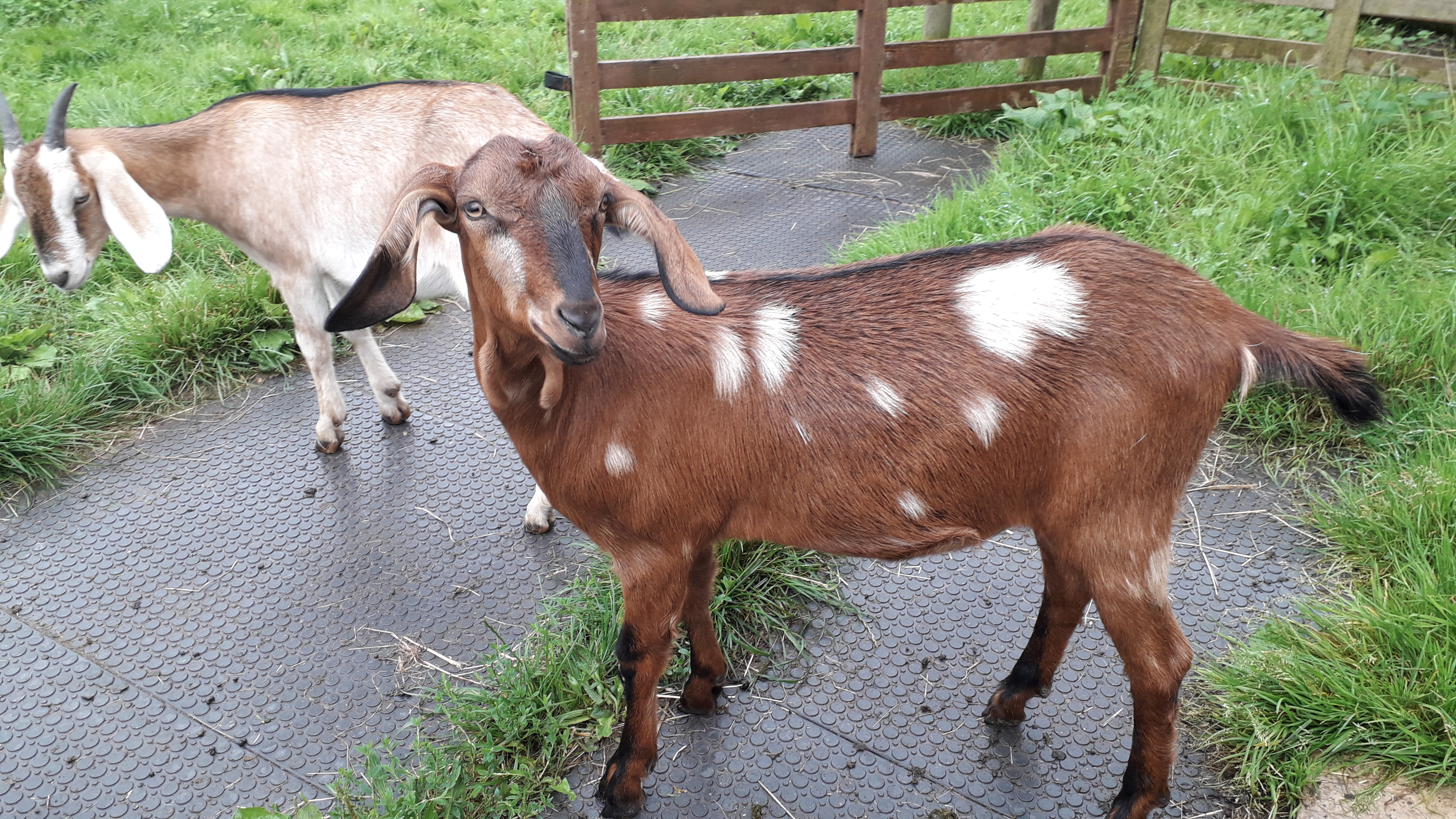
My kids born this year had a pure Anglo Nubian father. He was black and white and very handsome we named him Pongo! 

He sired beautiful kids a couple of spotty ones. I have started pack training 2 of them. They are doing very well. 

My herd is mixed breeds but to me they are all beautiful. 

My dream of making soap came true last year when I got my licence.  So most of my milk makes soap. I have found it to be popular.  I keep it as natural as possible. The milk, olive oil, coconut oil, almond oil lye and various essential oils.

The keeping milking and soap making is all done by myself; luckily I have my partner Shaun to help with the mucking out! 

The times I have to just watch and talk to my girls are the best ever; they all have such unique personalities.  If there a dispute Eliza (an old milker from sleight) who is the queen goat keeps them in order, the hair on her back goes up and she uses her head to push them apart, it’s all very discreet.  

As my friends say to me ‘you are living the dream aren’t you? My answer is always Yes!!!

We were so lucky over the Christmas time to find a cart. So we are impatient for the girls to grow now!

I hope to meet some of you soon.

I hope you enjoyed my short story and the pictures. 

Happy goat keeping 

Best wishes Debbie and Shaun 

Categories
Uncategorized

Wendy wins

This image has an empty alt attribute; its file name is img_1627.jpg

Both goats were entered into the Golden Gurnsey Club competition. Wendy was thrilled when notice came through to say she had won both first & second places with her girls. She was thrilled.

Both Dora & Bonnie have kidded during their lifetime with Wendy & Martin. Dora has produced twin girls and a single girl . Bonnie has also kidded having twin girls too.

This image has an empty alt attribute; its file name is img_1622-4.jpg

Photos taken by our secretary Wendy in June 2019 of her two winning goats Dora & Bonnie.

Categories
Uncategorized

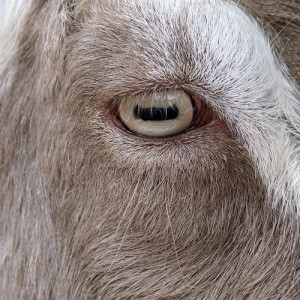
Why do goats have horizontal pupils?

Have you ever wondered why the pupils in goat’s eyes are horizontal?

I have always been fascinated by the shape of goat’s eyes. One of the most common questions we get asked by the general public at shows is why are goat eyes so strange?

So I decided to share some of the reasons just in case you get asked the same question.

It is all about survival: Because goats are grazing animals they have to be constantly alert in the event of an attack. Amazingly they are able to swivel their eyes 50 degrees. They can look up without moving their heads. This enables them to see approaching danger whilst still eating.

Sideways eyes (eyes situated on the side of the head not the front) provide much wider vision enabling them to have 280 degree vision around their bodies and the flat pupils do not absorb as much sunlight meaning the goat is not blinded by the sun. They are not colour blind and can see Blue green violet yellow and orange.

Categories
Uncategorized

A Day in the Life of a Pygmy Goat

Hello my name is Victoria,  I  live with my sister Red Rose and 6 other pygmy goats. The grey and white goat is called Hedd, he thinks he is in charge; he can be grumpy with us! He is a castrated male goat called a wether.

Last year Rosie and I were kids now that we are over a year old we are called goatlings. We will be goatlings until we are 3 years old, or until we have our own kids. Our day begins early in the morning when the human wakes us up and opens the doors of our sheds. We all get breakfast of some goat mix and some nice fresh hay- which is our favourite.

When we have finished our breakfast it is time for us to play. We are lucky because the humans put things into our field to run around, to jump on and climb up. We love to run and jump and climb.

After play we find more things to eat. Some humans think we eat grass like sheep …but we don’t really like that much, we like to browse; so we eat leaves twigs bark weeds infact we eat most things. I love to nibble coat toggles, buttons, trousers, sleeves or anything a little naughty if I can. Pandas the black and white goat favourite is headphone cables. He thinks it’s really funny to chew them. The human gets red faced and angry when he does that.

Once a week our human cleans out our sheds, Red Rose and I love to help out if we can.

We need to check our own bedrooms so they must all be checked for cleanliness.

We then start to look forward to tea time. Pygmy goats need a varied diet so most keepers feed a variety of foods including horse feed and goat mix. We should have fresh fruit and veg as well in our food.We also need access to water, which must be checked regularly by us in case the human forgets.

We are lucky goats though as we get chance to go out, sometimes we all go to shows and fetes so that more humans can see us. We all like it. Red Rose and I have even been to a theatre show! Some days we have proper shows. Here we are awarded prizes for being a beautiful goat and having the correct attitude with humans we are walking with.

Categories
Uncategorized

Liz & Neville

Mills goat history

Our goat-keeping history Neville and I actively kept goats from 1993 to 2006. Most of that time we had a small dairy herd of goats, having had a dairy built and were selling raw goats milk and cheese through two local health food shops. Earlier we just had pet goats. In about 2003 Charlie Bull at a show one day said on spur of moment to try Malibu our big BT milker in harness. She took to it that moment as though she had done it all her life. Likewise her daughter just like mum accepted harness without a qualm. Would that they were all like that.!!- Although over the years it has been fun getting our other goats in harness. Neville made a small milk cart which they pulled at first. Malibu and Martini quickly progressed as a pair pulling one of Angela’s big Victorian Wagonet. When both Neville and I became too ill me through a severe back problem, Neville through Cancer we decided it was time to give up our smallholding. The dairy goats went to a friend starting up in the Cotswolds and Malibu and Martini to Jean Bamford temporarily. Then Angela and Peter Rickerby offered to have them – that was great for as Neville became clear of Cancer, we were able to work our two again. Later Malibu died followed a year later by Martini. However Angela encouraged us to get some more and train them, Neville used a single Liverpool gig and I managed a pack goat at a slower walk. At the Three Counties Autumn shows we regularly helped with the Harness Goat Society stall, often winning a-prize for best stall. One year Neville made a model goat and Carriage , for the stand to illustrate how they are harnessed up. Sadly old age has crept up on us (2020). We still have three goats – Bramble, Hazel and Ivy , living with Angela but no longer have the strength to show. We still love them dearly though and visit often – and must thank Angela for the great care she gives them. We are still stalwart members of Harness goat Society and were Vice presidents of Worcestershire Goat Society until its demise.

Categories
Uncategorized

George & Rodrigo

George Bistransin is retired and lives on three acres in Amenia, New York, 85 miles north of New York City. He has five goats and is training his two bucks and wether to be harness and pack goats. He also has two does and is starting to make goat cheese. Over the years George worked as a Guard at the Metropolitan Museum of Art, a Latin Teacher, a Park Ranger in Boston and Docent. He started Theater Ludicrum and using his own translations, produced the Roman comedies and musical comedies of Plautus as a field trip opportunity for high school Latin students. He was active for many years in the Village Playwrights in New York City where several of his short plays were produced.

Categories
Uncategorized

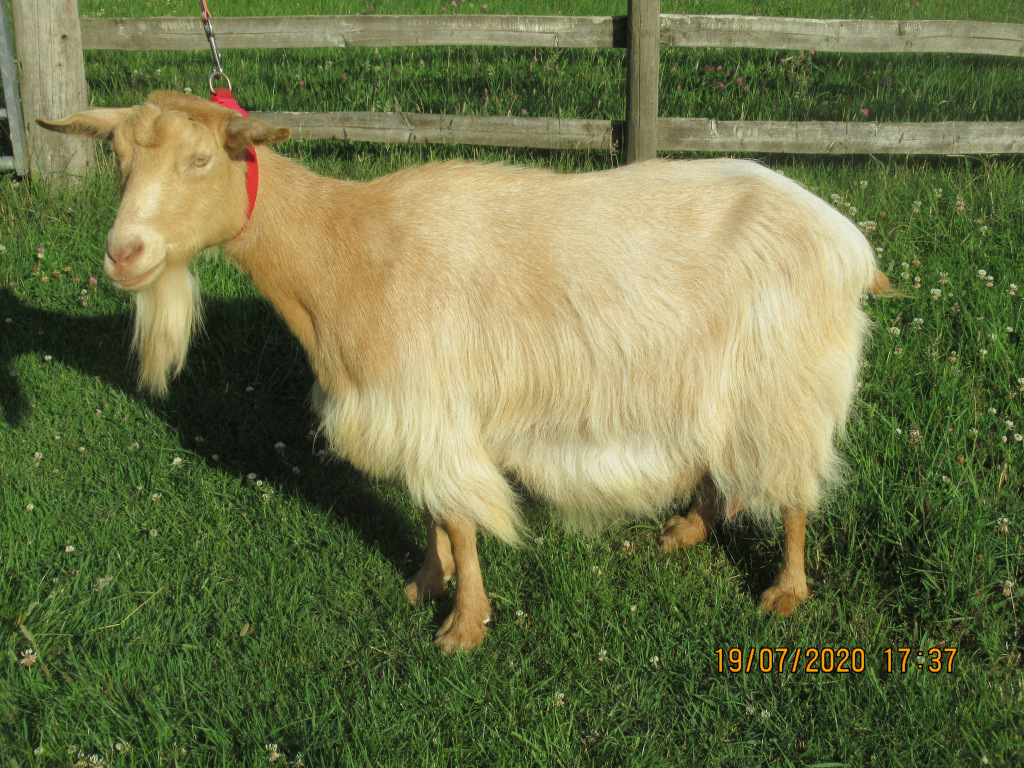
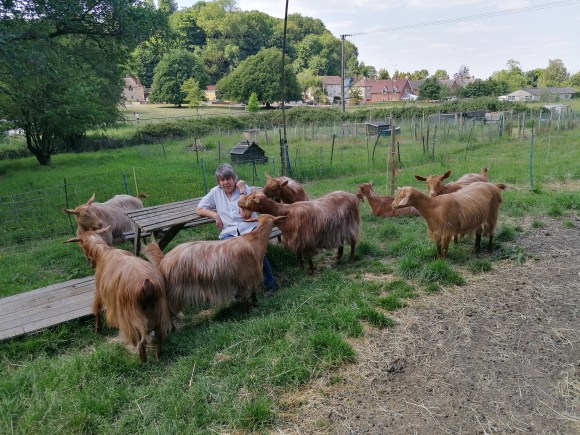
Lin & her Golden Gurnseys

I have always wanted goats, having listened to my mum telling me about her childhood, when she had a large white goat which took her to school each day in a cart. Tony, my husband, thought goats were a lot of trouble and refused to have any. My aunt left me a small legacy and I decided to ignore his arguments. After a lot of research I bought two pregnant golden Gurnsey goatlings from Heather Pink in Kent. Pinkybaa Caramel (Melly) and Fudge. Within a month tony was asking why I had left it so long before getting goats!! He was as smitten as I.
Melly had twins, Gig, a beautiful kid who was only beaten once into second place in the show ring as a kid and goatlings. Derry her other kid was destined to be sold as a pet but he grew on us and we decided to try and train him to pull a carts he was quite big for a golden Gurnsey and strong.
Derry proved a natural when I started training him, but we had to stop training when he developed a cough which lasted for a year. With a lot of help from Sally last year we made his be but in the show ring pulling one of sally’s carts. This has given him a lot of confidence, he does enjoy showing off.
This led us to try and breed a bigger goat without losing the GG gentleness and milking ability. Melly was the ideal goat to use as she is large and a good milker,being awarded her R117 for producing 1179 litres in a year. She was mated with a British Gurnsey in the hope that we would get at least one large male kid to train to a cart.
So we come round to her kidding. Out popped one girl, kitty-wake (kitti), a few minutes later Kiwi arrived, another girl, quickly followed by a third kookaburra (kookie) this was quite a surprise, three British Gurnsey girls and no boys!
At the moment we are just enjoying them, and who knows, one of them may be ideal to pull a cart.